What makes a house feel like home before anyone has even moved in? In this video, we explore how thoughtful styling turns a blank show home into a warm, inviting space buyers can instantly connect with.
From layering neutral tones and rich textures to balancing clean lines with soft curves, every design choice is intentional. Watch how subtle accents, wood finishes, black and gold details, statement rugs, oversized headboards, and carefully styled kitchens and bathrooms come together to create flow, warmth, and visual harmony throughout the home.
Whether you’re an estate agent, property developer, interior enthusiast, or homeowner looking for inspiration, this behind-the-scenes look at professional staging will change the way you see empty spaces.
Designing Desire in a Competitive Market
In today’s property market, first impressions are everything. Before a buyer considers square footage or suburb, they respond to feeling. Home staging has emerged as a powerful tool for estate agents and developers seeking to create that emotional connection. More than simply arranging furniture, it is the deliberate crafting of atmosphere—a visual narrative that allows potential buyers to imagine a life unfolding within the walls.
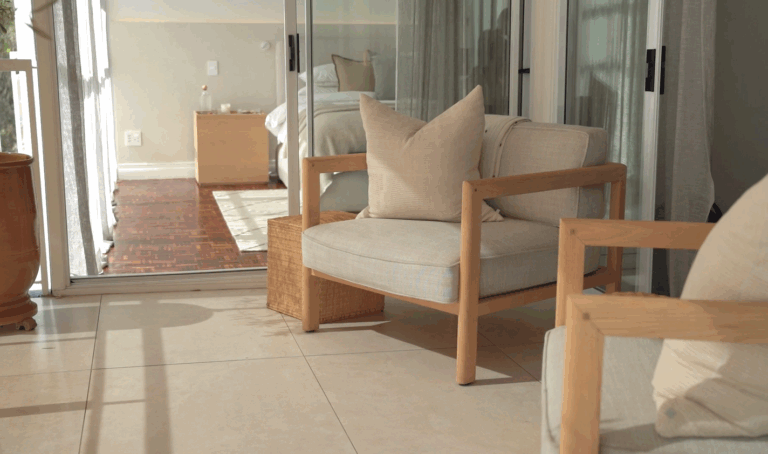
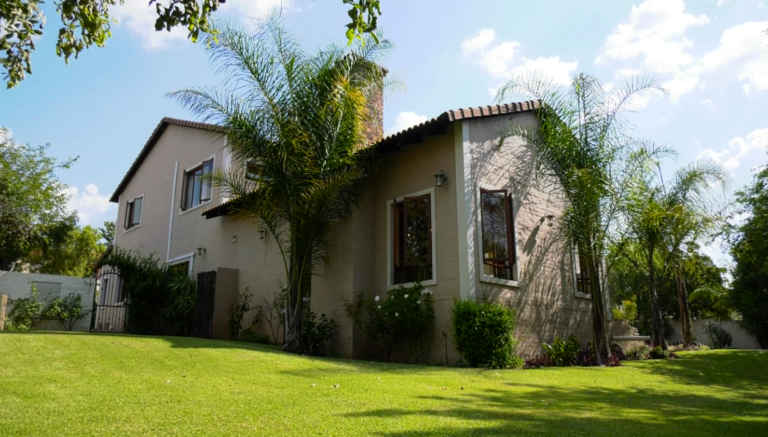
In a recently staged show home, the transformation began with a blank canvas. Empty rooms, though full of potential, can feel cold and undefined. Through the thoughtful introduction of rental furniture and curated décor, the space evolved into something warm, layered, and inviting, a home that felt lived-in without being personal, an approach shaped by Emma van Eden of Styled Living.
Neutral Foundations, Warm Accents
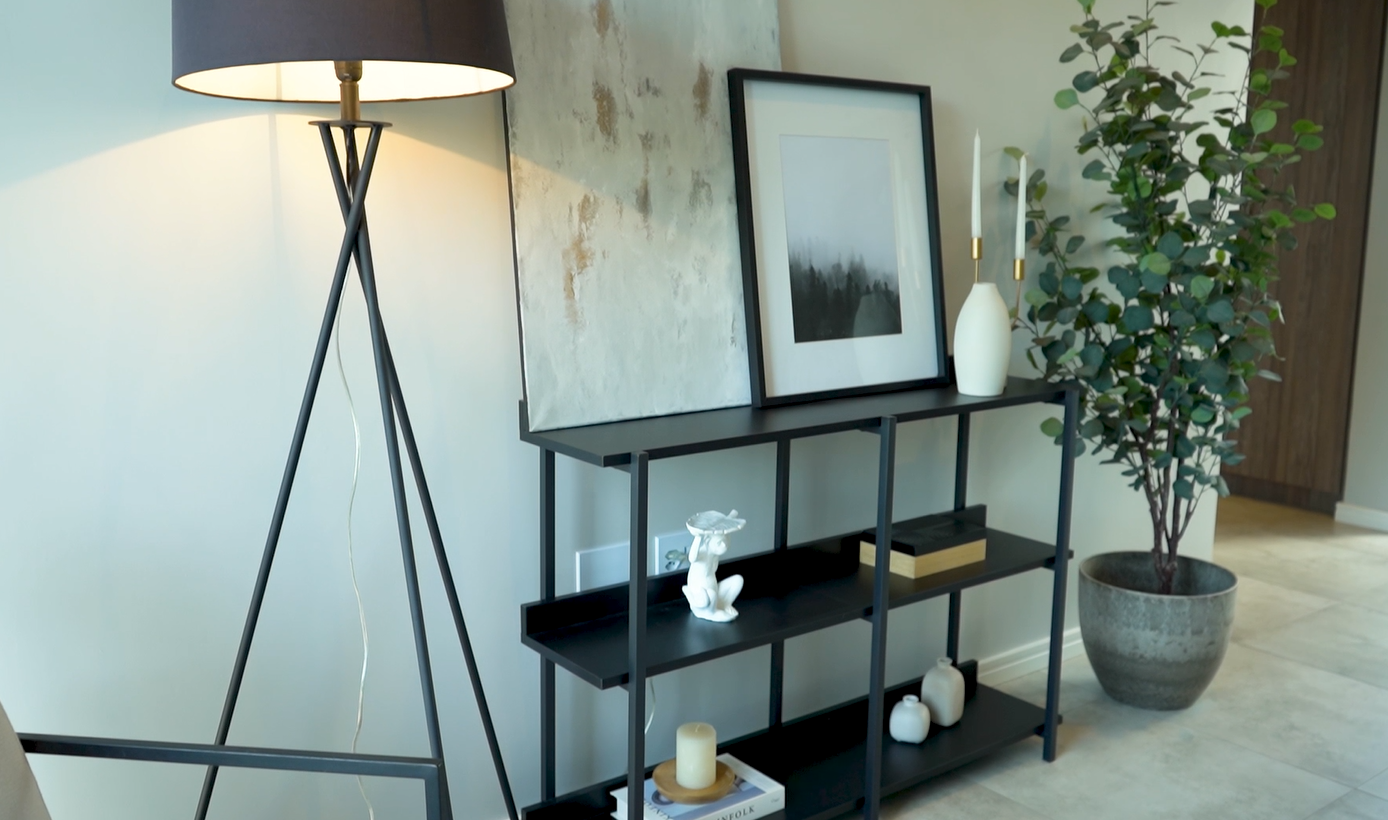
The design direction embraced minimalism while avoiding sterility. Working with the property’s existing palette of greys and whites, the staging introduced warmer tones of taupe, cream, and natural wood to soften the aesthetic. Black accents, paired subtly with touches of gold, threaded continuity throughout the interiors, adding depth and quiet sophistication. Texture played a leading role. A patterned rug anchored the living area, its dark flecks echoed in scatter cushions and occasional chairs. The interplay of fabrics, woven textiles, smooth finishes, and tactile surfaces added dimension without overwhelming the eye. Every choice felt intentional, cohesive, and restrained.
Kitchens and Patios: Extending the Narrative
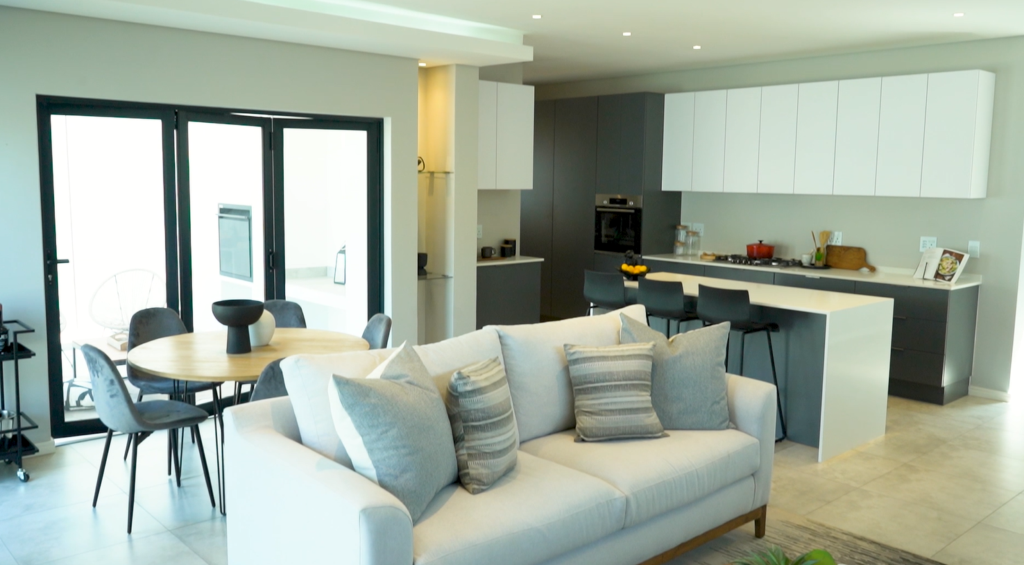
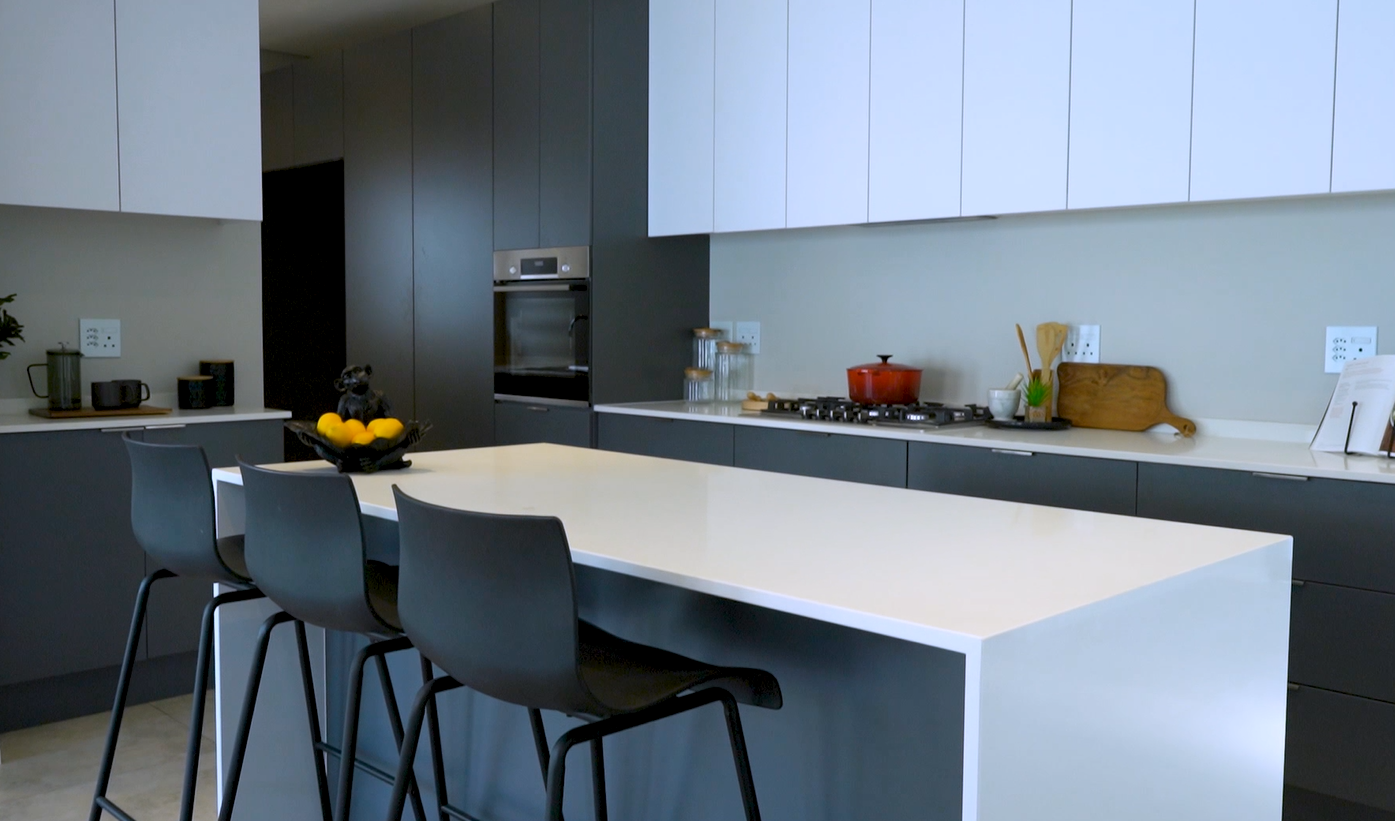
The sleek, contemporary kitchen open to the main living area required gentle warming. Wooden accents and a few carefully chosen decorative items maintained openness while suggesting everyday use. The key, as always in staging, was restraint: enough detail to imply lifestyle, never enough to clutter. The patio continued the interior story outdoors. Repeating the same colour palette and curved forms allowed the transition from inside to outside to feel seamless. By maintaining visual consistency, the home achieved that sought-after indoor-outdoor flow so prized in modern living.
Bedrooms that Invite, Not Overwhelm
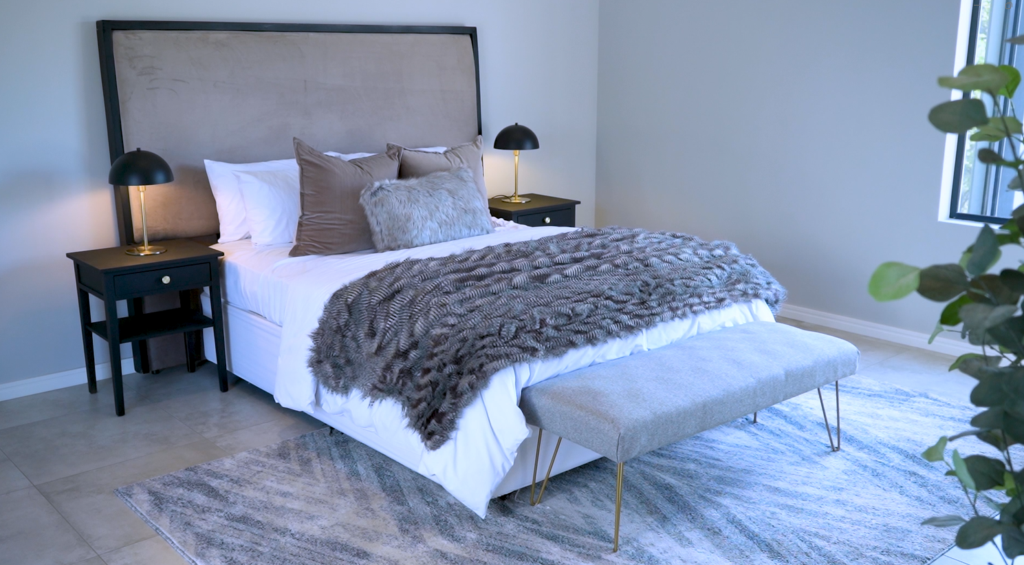
Upstairs, the main bedroom mirrored the neutral palette established below. Hints of black and gold punctuated soft taupe’s and creams, while layers of textured velvet cushions, plush throws, and upholstered headboards introduced comfort. With high ceilings offering vertical opportunity, an oversized headboard and tall decorative elements drew the eye upward, celebrating the room’s generous proportions. The result was modern yet cozy: a carefully balanced composition that felt aspirational without becoming unattainable.
The Power of Shape and Scale
Because the home featured open-plan living within a compact cluster layout, proportion was critical. Furniture selections respected the scale of each room, ensuring movement and flow remained unobstructed. To offset the linear architecture of sofas, cabinetry, and television walls, circular forms were introduced: a round dining table, curved coffee tables, and softly contoured patio seating. These rounded silhouettes created visual interest while preventing the space from feeling rigid. In smaller properties, especially, balancing straight lines with curves can soften the environment and subtly expand the perception of space.
Subtle Finishing Touches
Even the bathroom followed the philosophy of minimal intervention. Bright white towels, a few orchids, greenery, and a softly scented diffuser were enough to elevate the space. Staging here is not about excess; it is about suggestion, presenting rooms at their fullest potential while leaving space for imagination. Ultimately, it is less about furniture and more about storytelling. Whether achieved through a handful of accessories or a complete installation, the purpose remains the same: to reveal what a property could become. In highlighting warmth, cohesion, and possibility, empty rooms are transformed into compelling narratives and houses into homes that buyers can see themselves stepping into.