A calm visual walk through a modern interior where clean lines meet warmth and texture. This video explores how thoughtful material choices and subtle layering can turn minimal spaces into places that feel comfortable, personal, and lived-in without overdoing it.
An exploration of restraint, texture, and atmosphere
Minimalism is often associated with cool palettes and hard edges, yet this home challenges that assumption. The spaces unfold with a sense of calm rather than severity, proving that simplicity can still feel layered and inviting. Every decision appears considered, guided by an understanding that how a space feels is just as important as how it looks, an approach led by Lane Reeves of Metaphor Designs.
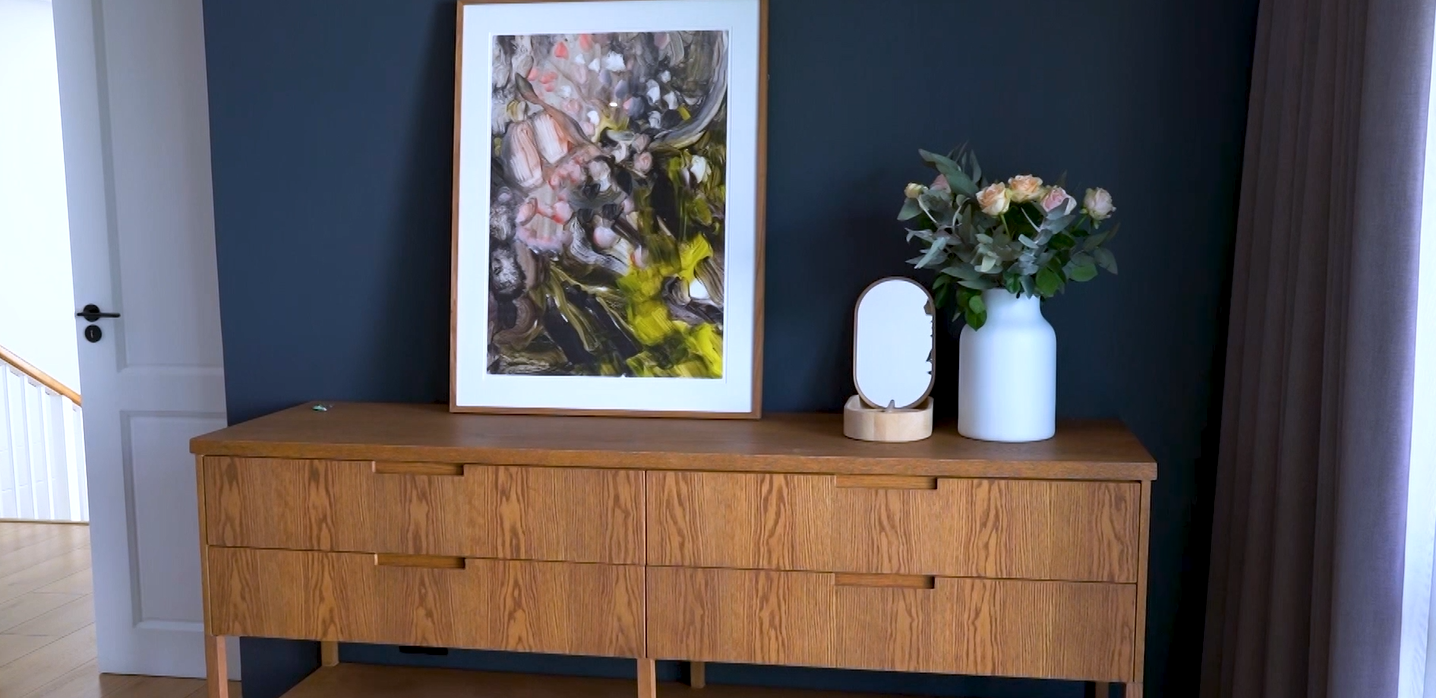
Design That Starts With People
The interior reflects a design approach rooted in psychology responding to how the occupants live, move, and rest within the home. Rather than filling rooms with excess, the focus is on selecting fewer pieces with greater intention. Each element is bespoke, chosen, or designed specifically for this setting, allowing the house to feel personal without becoming expressive to the point of distraction.
Texture as Comfort
In the living area, warmth is built through layering rather than color. Linen upholstery, velvet accents, patterned cotton, and textured wall finishes soften the minimalist structure. Practical considerations, such as durability for a family with children, are addressed without compromising the calm aesthetic. The room feels lived-in, not styled.
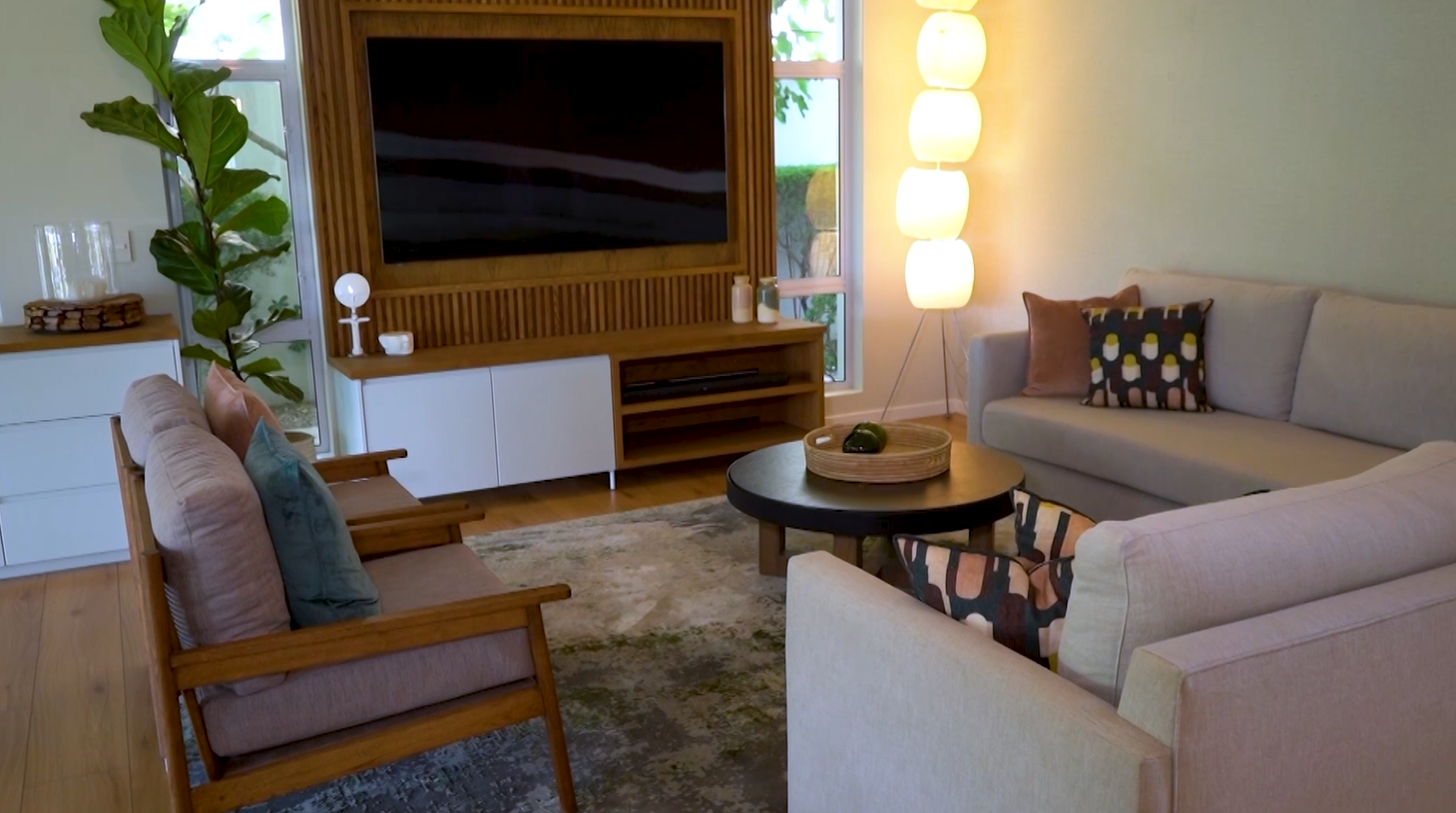
Cool Surfaces, Warmer Transitions
Moving from the kitchen into the dining area, materiality subtly shifts. The kitchen leans into clean lines and cooler finishes, creating clarity and function. As one enters the dining space, warmth is introduced through wood and softer tones. The contrast is deliberate but restrained, ensuring the transition feels natural rather than abrupt.
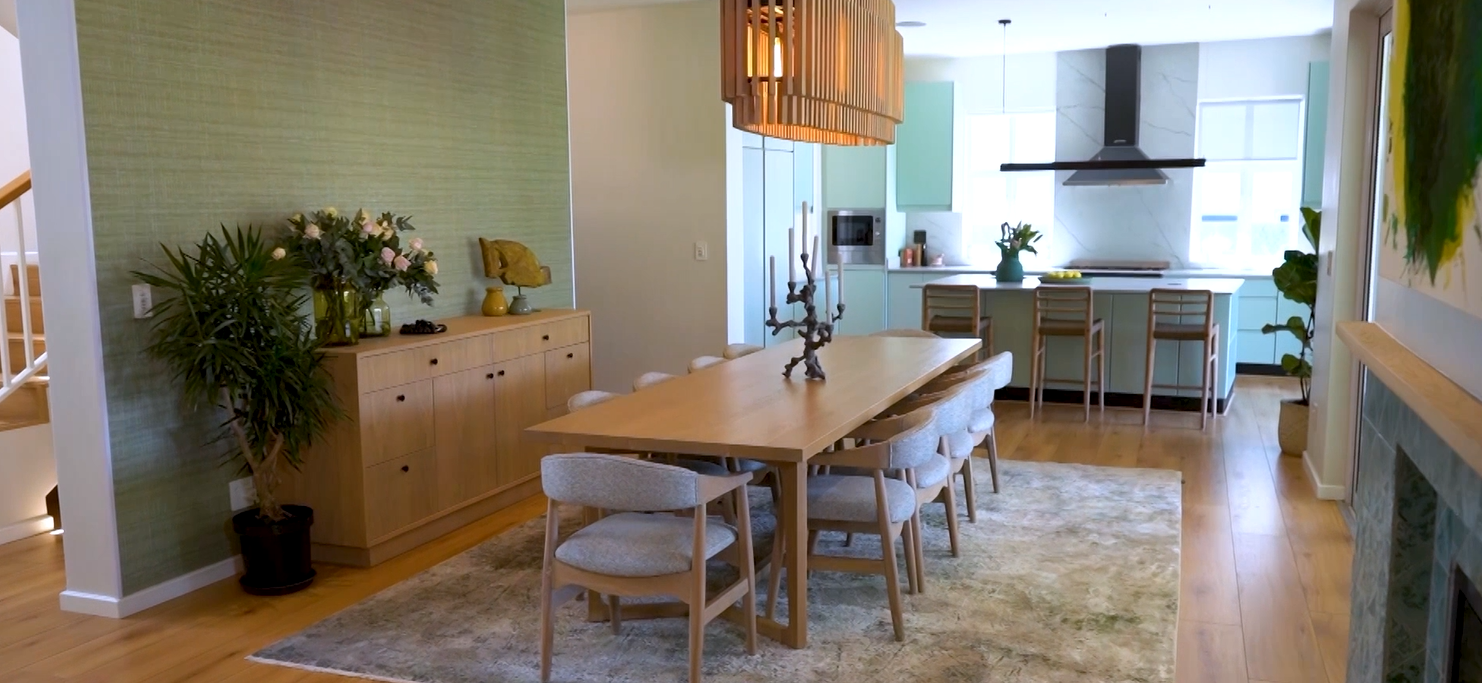
Private Spaces, Individual Moods
The main bedroom adopts a darker, more intimate tone, using depth and subtle colour shifts to create a restful atmosphere. Custom furniture introduces both function and visual order. The bathroom, while connected through shared tones, asserts its own character, lighter, softer, and more open, reinforcing the idea that cohesion does not require uniformity. Together, these spaces suggest a quieter interpretation of minimalism, one that values warmth, tactility, and emotional ease over visual austerity
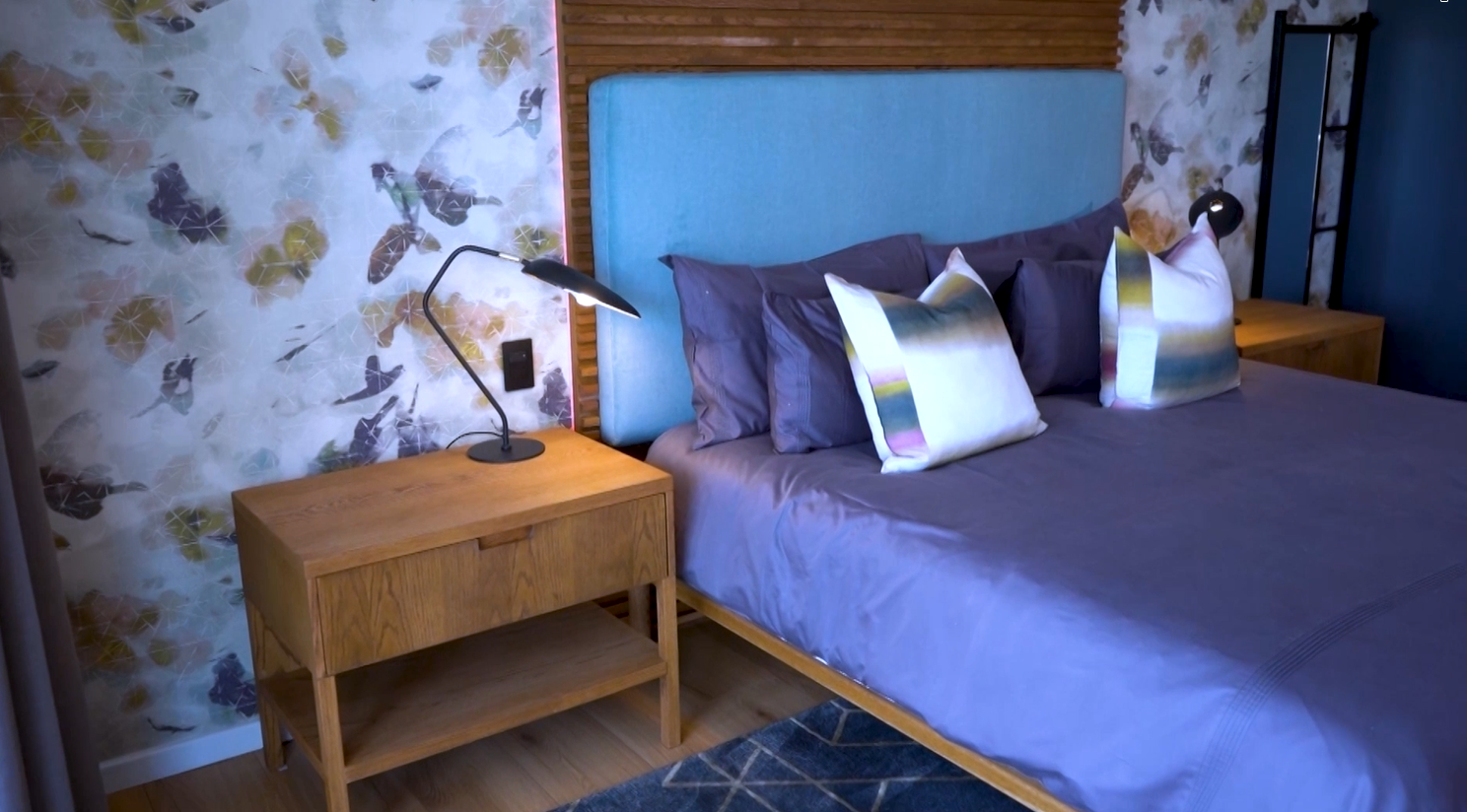
Craft as a Unifying Thread
Handcrafted furniture anchors the dining room, where proportion and comfort have clearly been prioritized. Wooden elements reappear throughout the home, acting as a quiet connector between rooms. Accents of green repeated in finishes and wall treatments allow visually different spaces to speak to one another without relying on symmetry or repetition.