Step inside a Cape Town home where architecture and landscape work as one. From a tranquil courtyard framed by tree ferns and magnolias to a seamless patio that opens onto a golf course, this garden is designed to be experienced from every room.
Discover how layered greens, seasonal white blooms, textured grasses, and meaningful design details transform once-stark spaces into calm, living environments. With no traditional lawn and a focus on structure, movement, and framed views, this landscape shows how thoughtful planting can completely reshape a home’s atmosphere.
A Vision Years in the Making
Some gardens begin with a brief; others begin with a long-held intention. This Cape Town landscape dates back to 2015, when the homeowners first discussed the possibility of designing a garden around a future property. That opportunity emerged in 2022 after an extensive renovation effectively transformed the house into a new build. From the outset, the landscape was considered alongside the architecture rather than added at the end, planted in spring, and conceived as a structural extension of the home, an approach led by landscape designer Kathryn Phillips.
A Courtyard at the Core
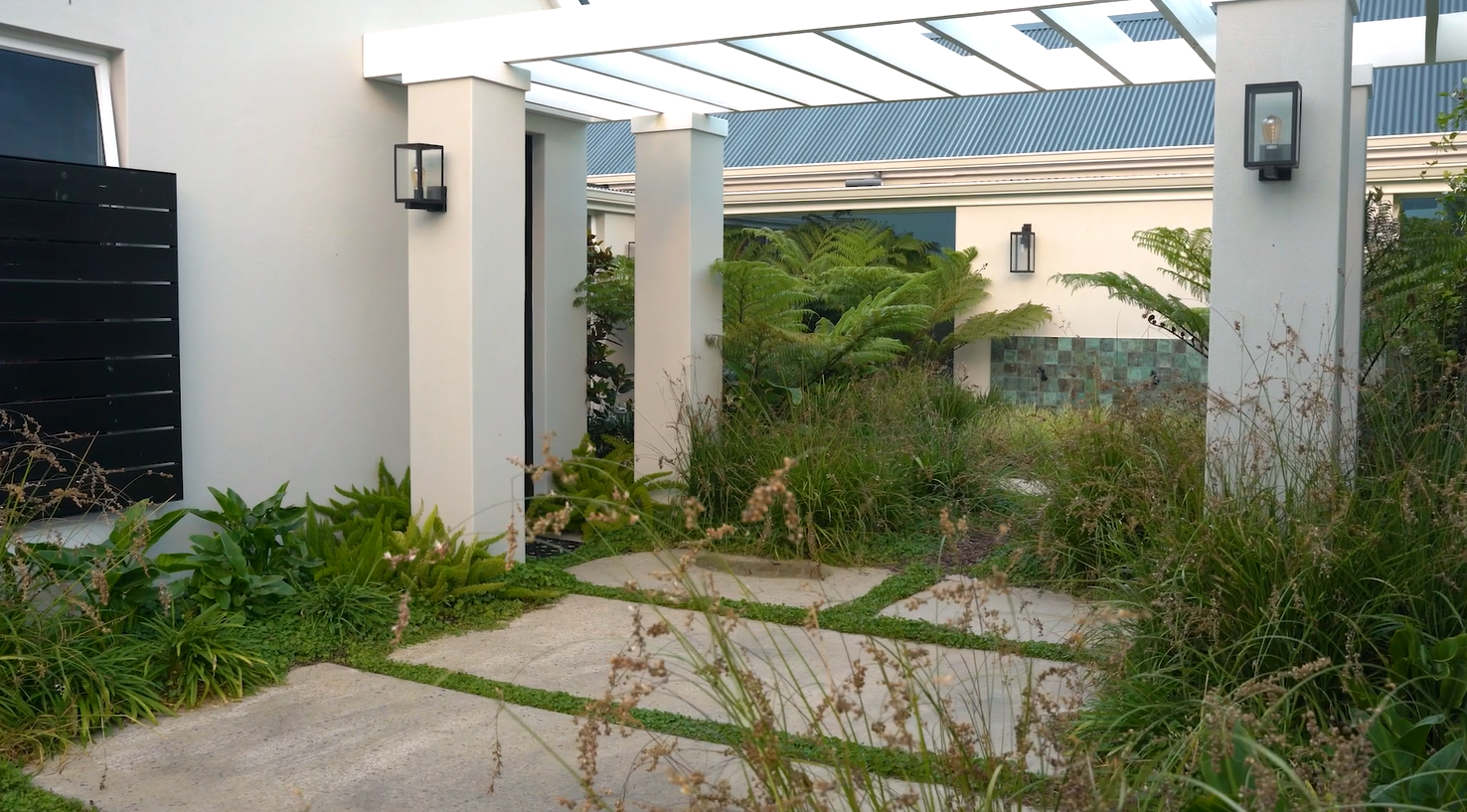
At the heart of the home, a courtyard connects bedrooms and living spaces, visible from nearly every room. A restrained palette of whites and layered greens softens the architecture, with tree ferns filtering light and Magnolia ‘Little Gem’ adding height. A trough-style water feature with an otter statue introduces gentle movement, while star jasmine climbs formerly bare walls. Seasonal blooms from Japanese anemones to white agapanthus and textured grasses ensure the space evolves beautifully throughout the year.
Reconsidering the Lawn
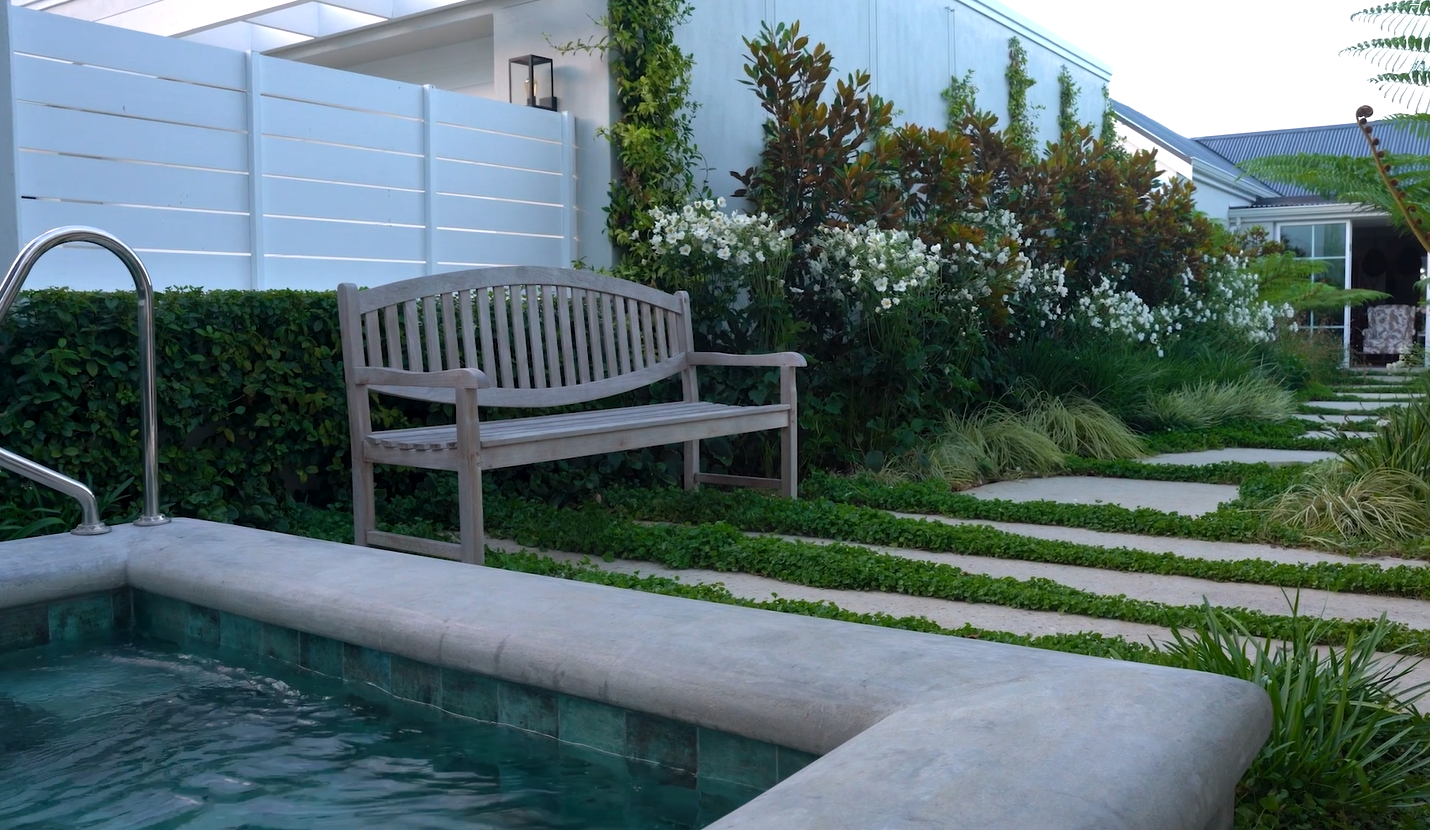
The homeowners chose not to include traditional lawn areas within the primary garden spaces. Instead, exposed aggregate paving and inset pavers interspersed with planted strips establish rhythm and permeability. The absence of expansive turf foregrounds structure and planting detail, creating a landscape that reads as layered rather than open and uninterrupted. The result is measured and contemporary, with greenery woven through hard surfaces rather than dominating them.
Personal Narratives in Planting
Beyond spatial composition, the garden accommodates elements of personal significance. Along a passageway outside the children’s bedrooms, statues gifted at their births are positioned on plinths, visible from within each room. A hedge known as ‘Sheena’s Gold’, selected in remembrance of a family member, lines part of the walkway. Creepers soften enclosing walls, turning a transitional corridor into a contemplative space. In these instances, planting and placement function not only aesthetically but symbolically.
Framing the Borrowed Landscape
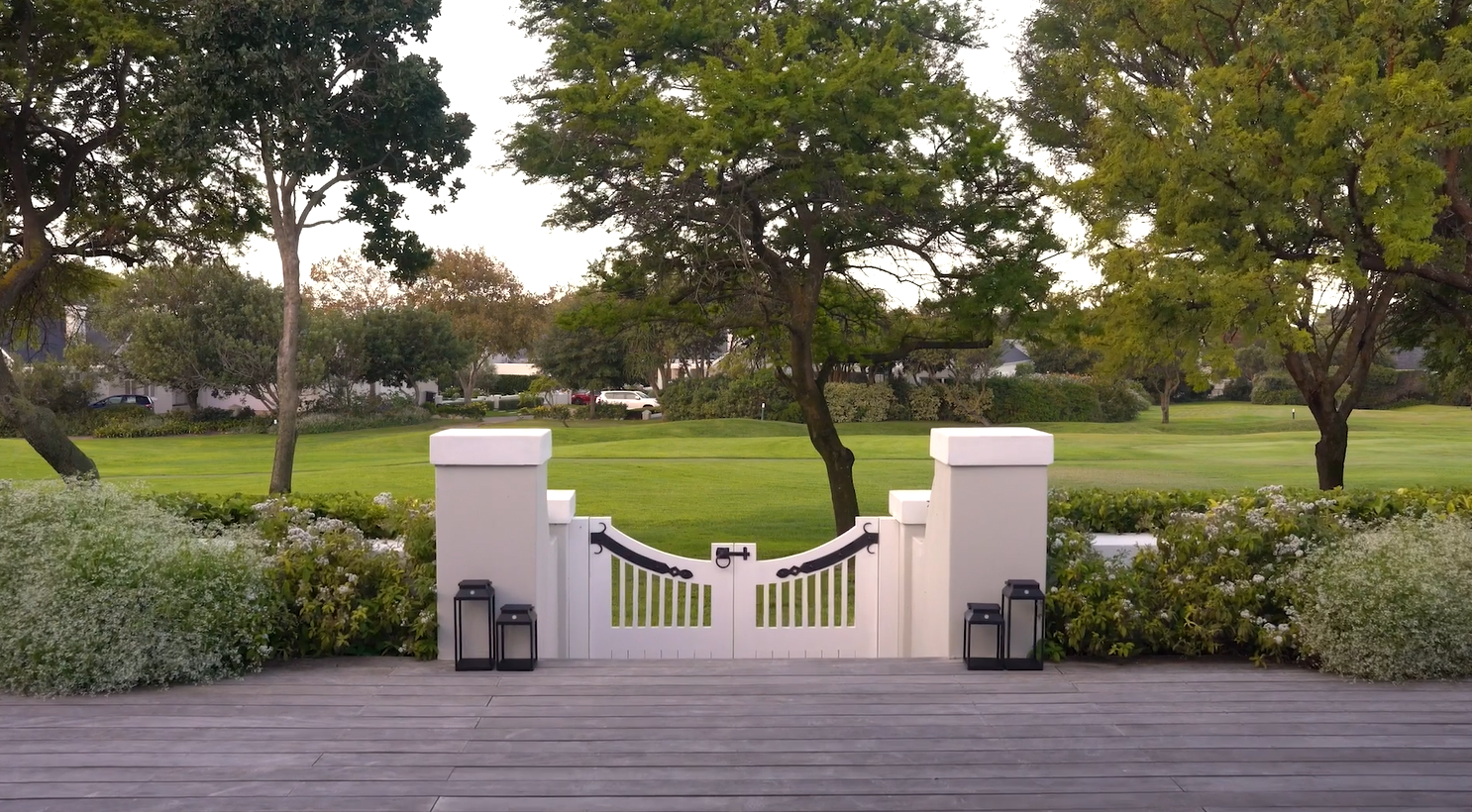
To the rear, the property opens onto a golf estate. Rather than competing with the expansive outlook, the planting frames and moderates it. A decked patio is edged with heliotrope, euphorbia and viburnum hedging, establishing definition without obstructing views. From an office window, a fish eagle statue appears poised in flight above the fairway backdrop, surrounded by iceberg roses and tulbaghia. Indigenous plantings cascade down a reshaped embankment in muted silver and white tones, guiding the eye outward.
Taken together, the landscape operates as both enclosure and extension. It tempers architecture with organic form, incorporates memory into material space, and mediates between interior life and the broader environment. Rather than standing apart from the house, the garden reads as an integrated spatial layer, one that evolves quietly with season, light, and use.