From a last-minute wedding solution to a refined handcrafted brand, discover how passion, design, and intention come together to create beautiful, meaningful candles.
A wedding shortcut that sparked a bold, design-driven candle story.
What began as an unexpected solution for a wedding quickly evolved into something far more enduring. Three years ago, Kallen Claasen of Ethereal Candles and her husband, whose story anchors this journey, found themselves faced with an expensive quote for wedding candles. Rather than compromise, they improvised. What followed was a simple yet defining moment: making their first candle together at home. That single act, born out of necessity rather than ambition, laid the foundation for a business that today centres on craftsmanship, intentional design, and quiet innovation.
Where design meets intention
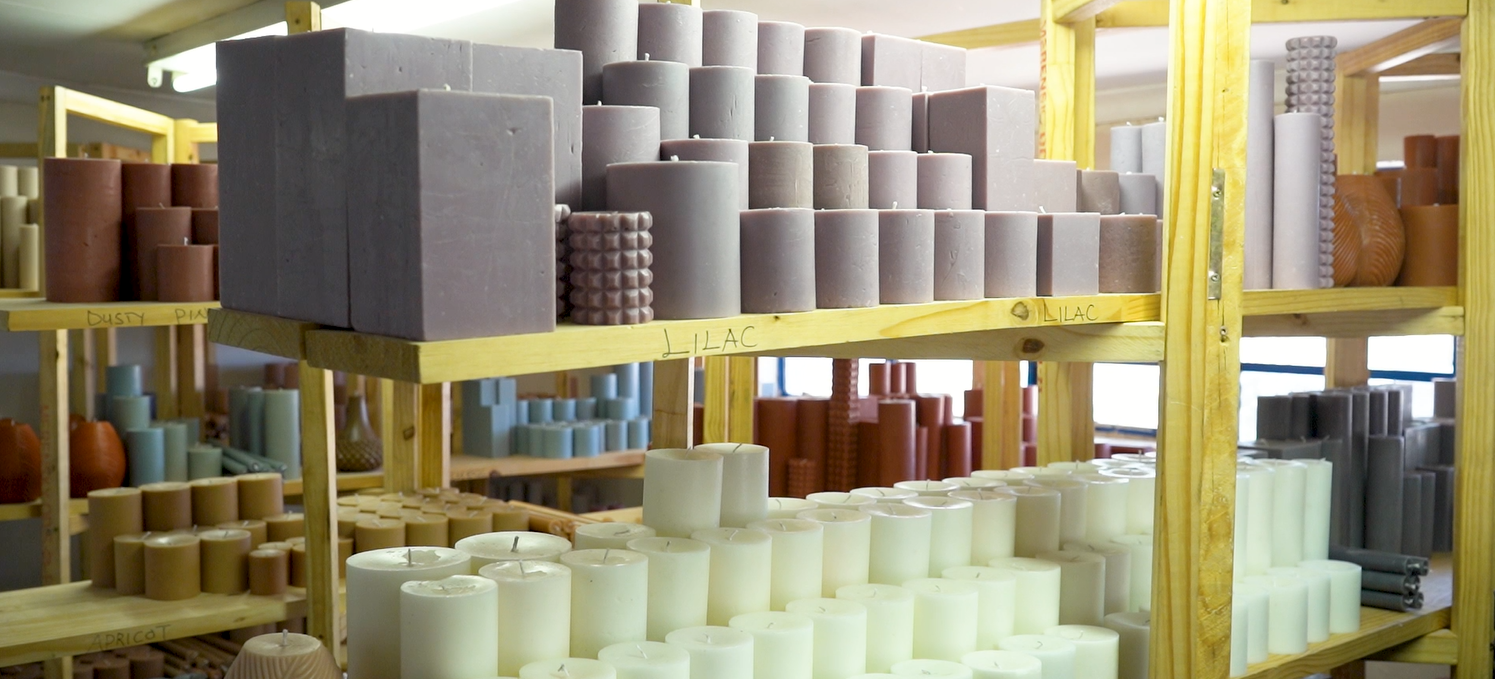
At the heart of their work lies a deep appreciation for individuality. Each candle is carefully handmade, with shapes and forms developed from original ideas rather than standard moulds. This approach ensures that no piece feels generic. Their design language draws heavily from mid-century modern principles, clean lines, balance, and understated elegance, resulting in candles that function as both décor and object. The emphasis is not just on beauty, but on creating pieces that feel considered and timeless.
A science of colour and craft
Beyond form, colour plays a defining role in their collection. Rather than relying on pre-set palettes, the creators developed their own colour system using mathematical precision, allowing for a cohesive yet distinctive range. Every element from wax to wick to dye is locally sourced, reinforcing a commitment to authenticity and locality. This careful curation of materials ensures that each candle is not only visually striking but also rooted in a proudly South African identity.
The rhythm of making
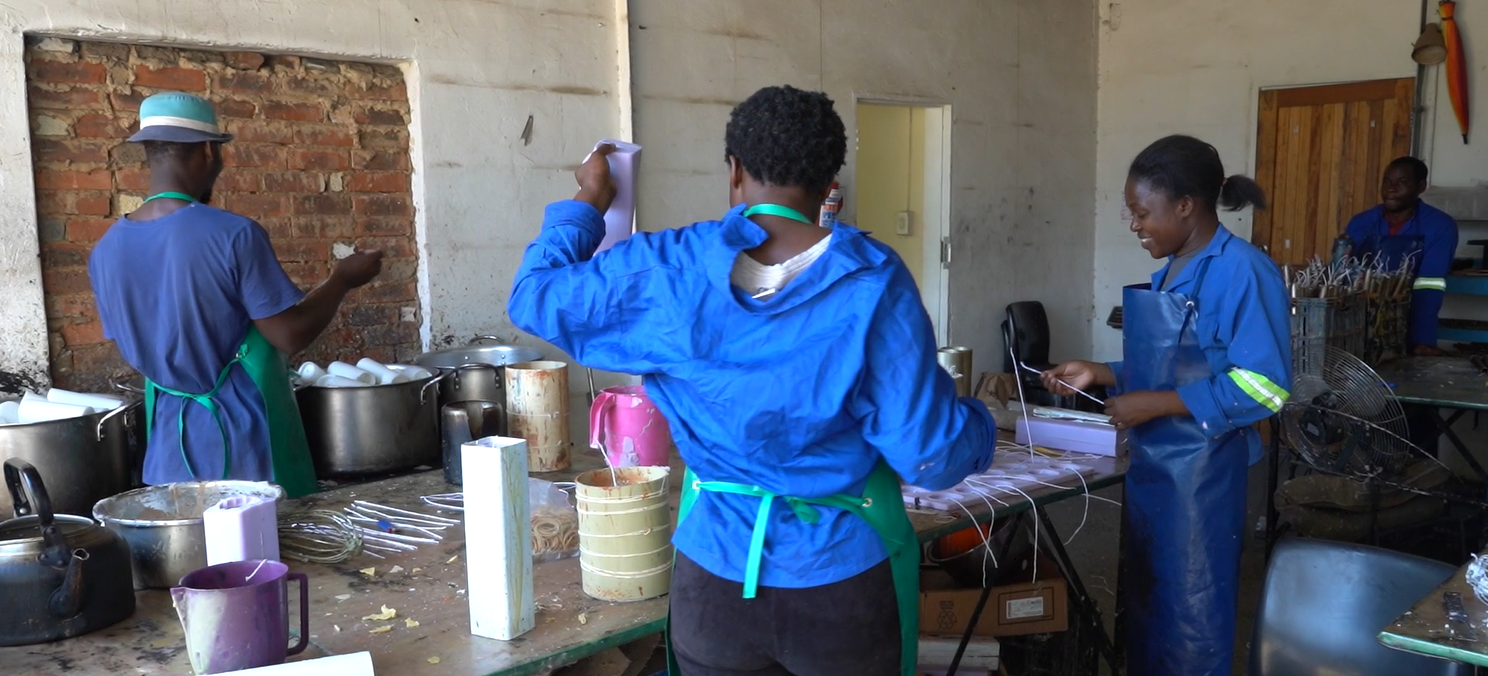
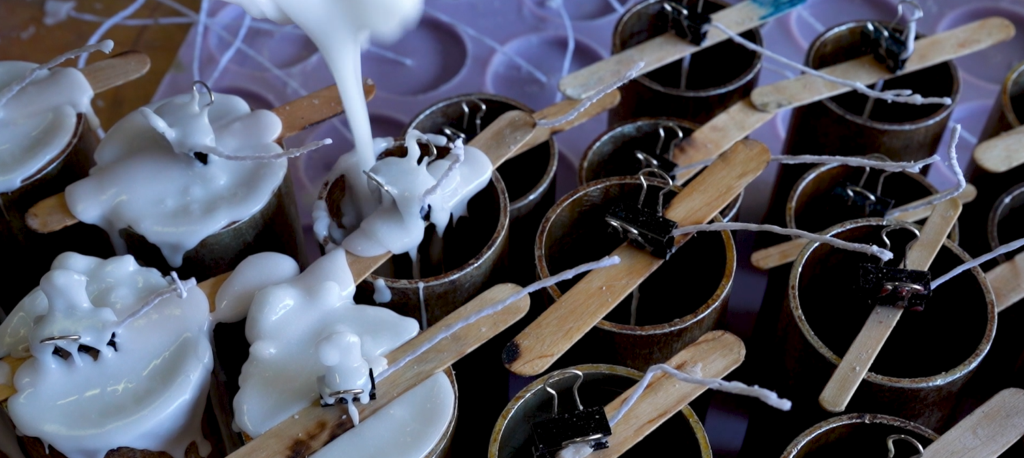
The production process is a study in patience and precision. Wax is slowly melted, blended with dye, and brought to an exact temperature before being cooled and poured. Timing is critical; even slight variations can affect the final texture and finish. The placement of the wick, the cooling period, and the pouring technique all contribute to the candle’s final form. What appears simple on the surface is, in reality, a layered and meticulous process that balances technical control with artisanal skill.
More than scent, a sense of place
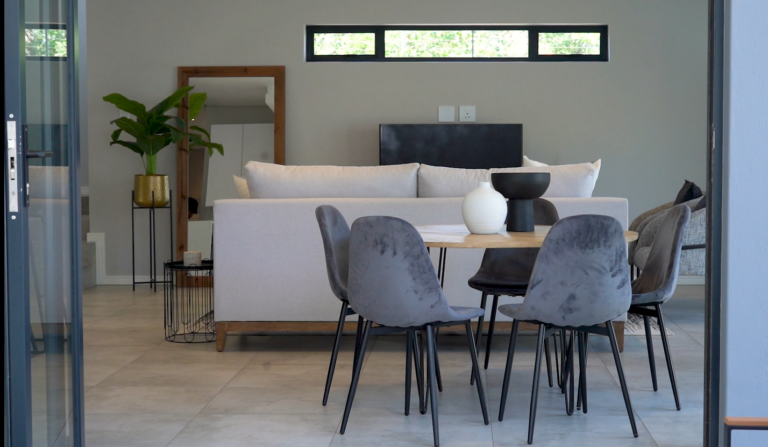
Candles, in this context, move beyond mere fragrance. They become tools for shaping the atmosphere, introducing warmth, light, and subtle emotion into a space. Whether placed on a dining table, a bedside table, or a kitchen counter, they serve as quiet anchors in the home. By separating sculptural and scented collections, the makers allow for intentional layering of visual impact without overwhelming the senses. The result is a curated environment rather than a chaotic mix of competing fragrances.
Objects that hold memory
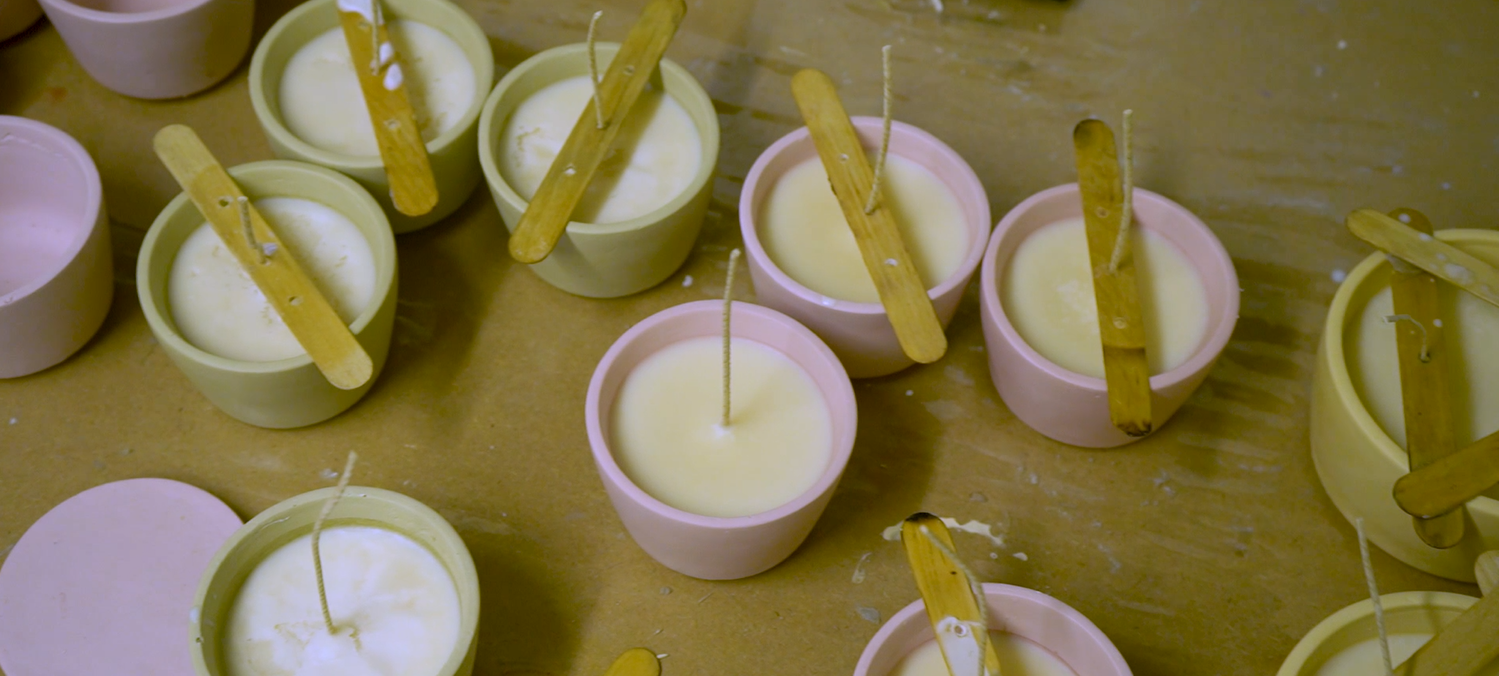
Perhaps the most compelling aspect of these candles is their emotional resonance. Frequently tied to weddings, gifts, and shared moments, they become carriers of memory. A candle once lit at a celebration finds its way into someone’s home, extending the life of that moment. In this way, the product transcends its function. It becomes personal, intimate, and quietly significant as an everyday object that connects people to experiences, spaces, and each other.