Experience a different kind of swimming where nature does the work. This feature explores how natural pools use plants and biological systems to create clean, crystal-clear water without chemicals.
A different kind of pool
In Scarborough, at the southern edge of the Cape Peninsula, Andy Jameson of Leaf and Stone Natural Pools introduces a way of swimming that feels less constructed and more discovered. His work challenges the familiar blue rectangle of chlorinated water, offering instead a living system, one that borrows its logic from nature rather than chemistry. Here, the pool is not just built; it is cultivated.
The science beneath the surface
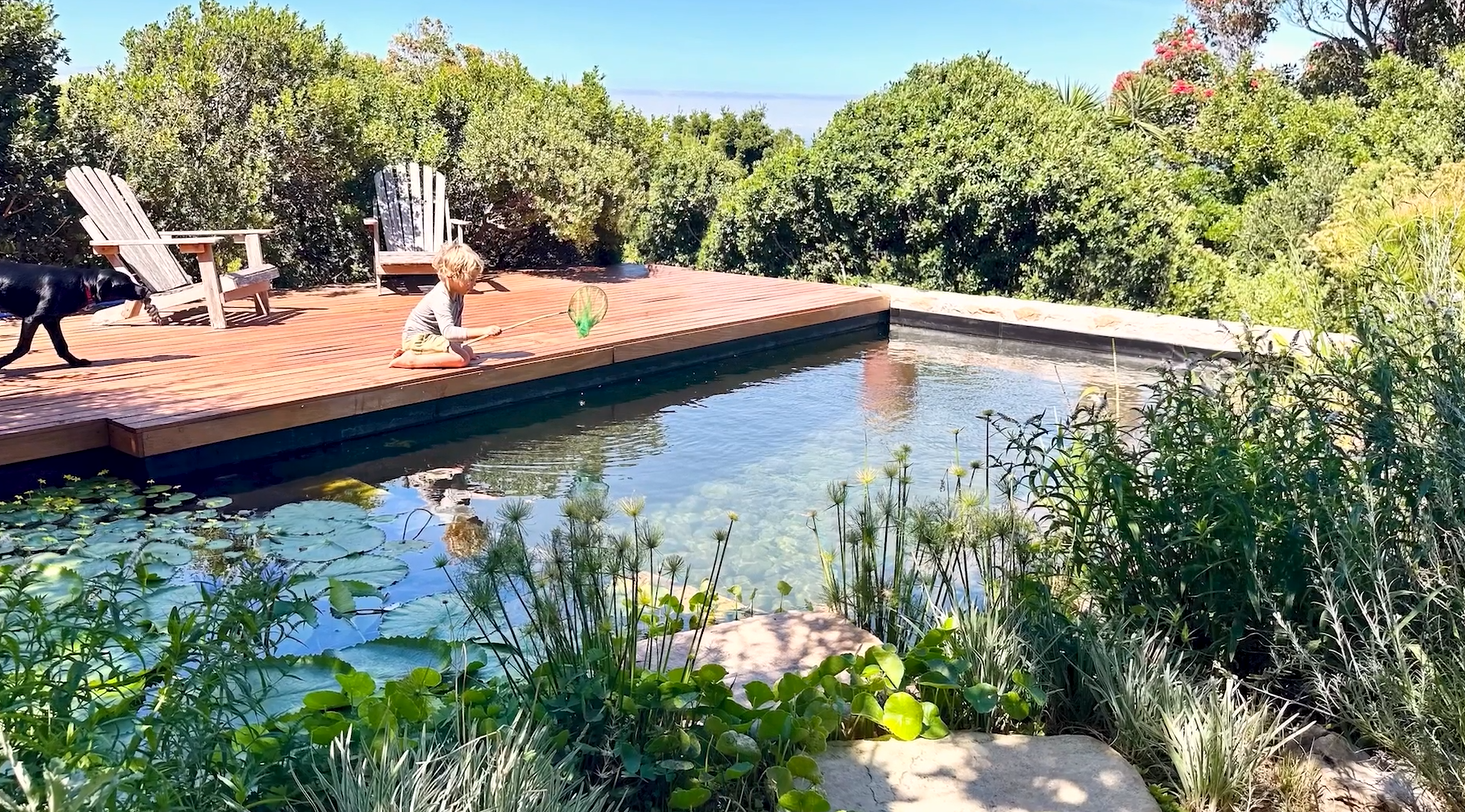
At its core, a natural swimming pool is deceptively simple: a man-made body of water that relies on biological processes instead of chlorine. Beneath the still surface lies a complex ecosystem. Plants, gravel, microbes, and beneficial bacteria work together in what is known as a biofilter or regeneration zone. Water moves slowly and continuously through this planted wetland, where impurities are absorbed and broken down, resulting in water that is not only clean, but balanced. It is less about sterilisation and more about harmony.
Designed, not dictated
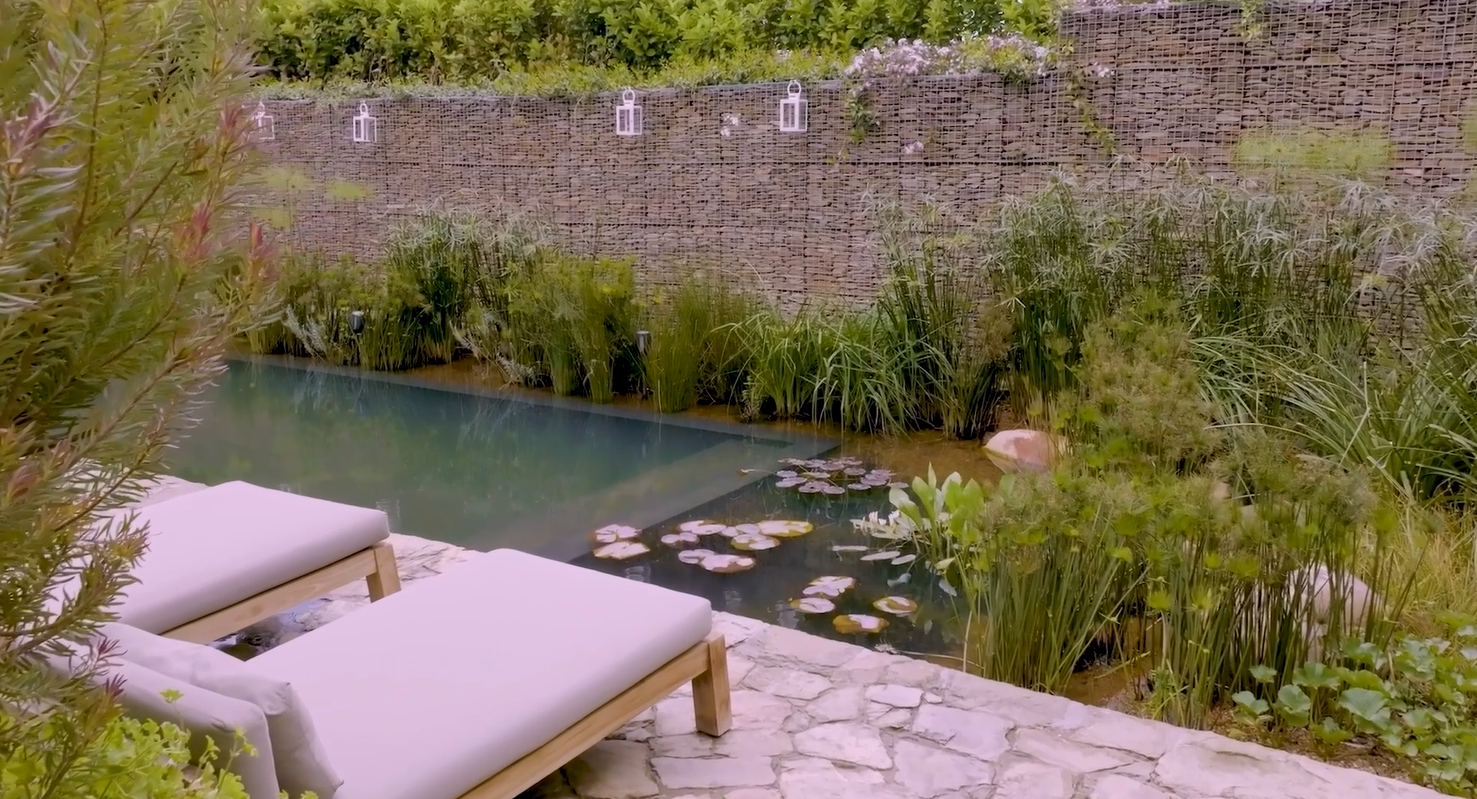
Contrary to popular belief, natural pools are not confined to wild, pond-like aesthetics. They can be shaped into formal, contemporary designs or allowed to echo the irregular beauty of nature. Often, the planted wetland mirrors the swimming area in size, though the relationship between the two can vary. Some designs blur the boundary, inviting swimmers to move among aquatic plants, while others keep the experience visually separate. The result is always personal, guided as much by comfort as by creativity.
Clarity and quiet
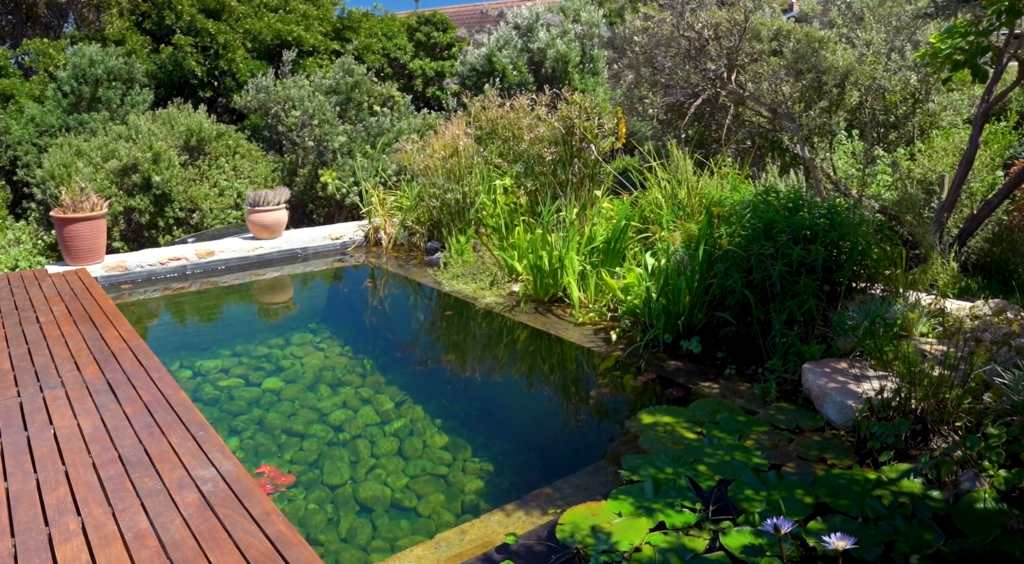
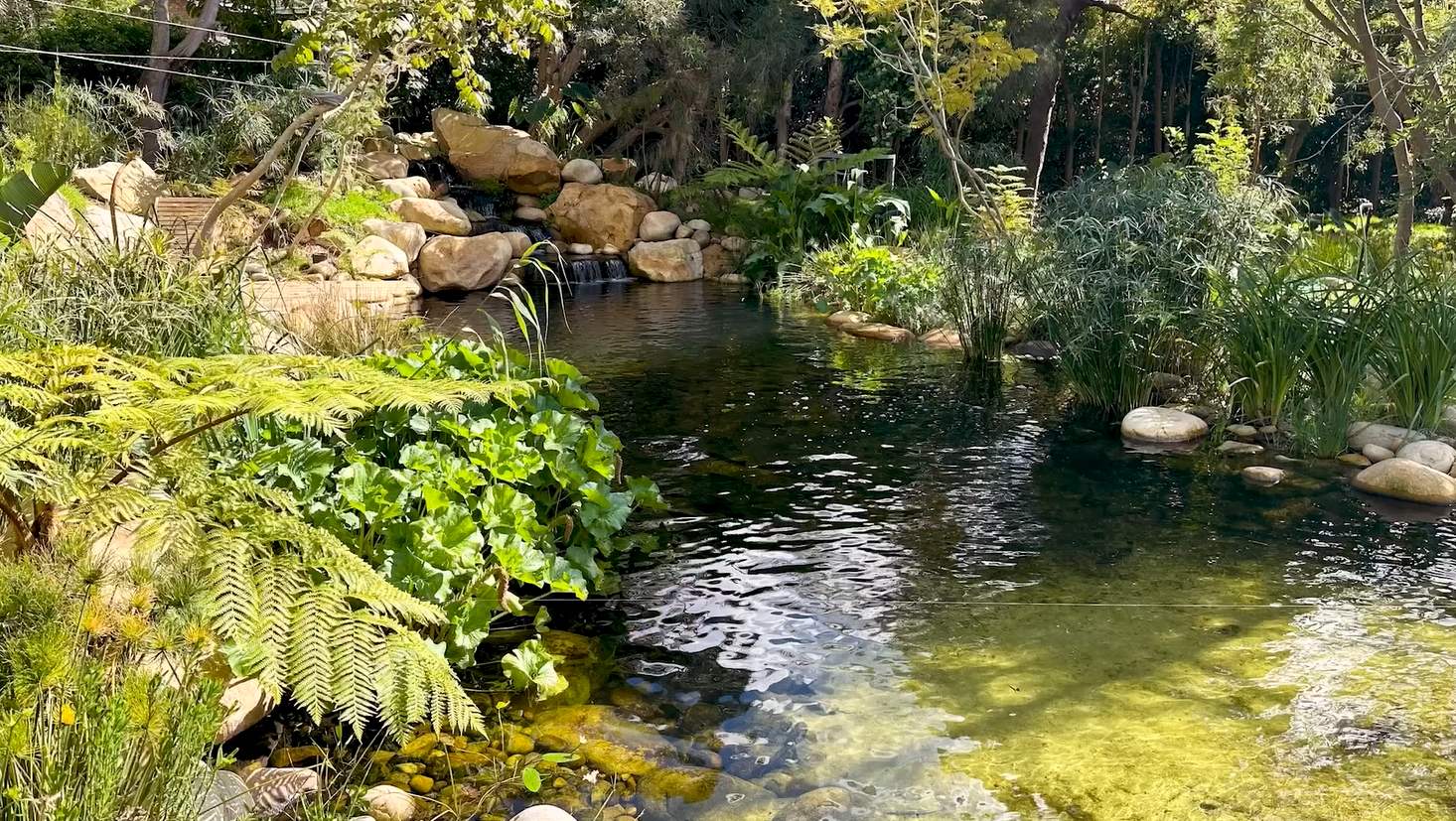
What makes these pools particularly striking is their clarity. Unlike many natural water bodies in South Africa, where tannins tint the water brown, these systems are remarkably transparent, allowing the bottom to be seen even at depth. This is maintained through gentle circulation powered by small, nearly silent pumps. The absence of mechanical noise enhances the experience, allowing the surrounding environment to take centre stage. It is water that feels alive, yet undisturbed.
A garden that moves
Owning a natural pool is less like maintaining infrastructure and more like tending a garden. Plants grow, shift, and evolve with the seasons, requiring occasional pruning and thoughtful care. For those who enjoy gardening, this becomes an extension of that practice, an immersive, ongoing interaction with a living system. The pool is never static; it changes subtly over time, shaped by both nature and attention.
A shift in experience
To swim in a natural pool is to recalibrate expectations. The absence of chlorine, the softness of the water, and the presence of life create an experience that feels instinctively right. It is not just about cleanliness, but about connection. And once that shift happens, returning to conventional pools can feel jarring. The contrast is immediate between water that is controlled and water that is in balance.